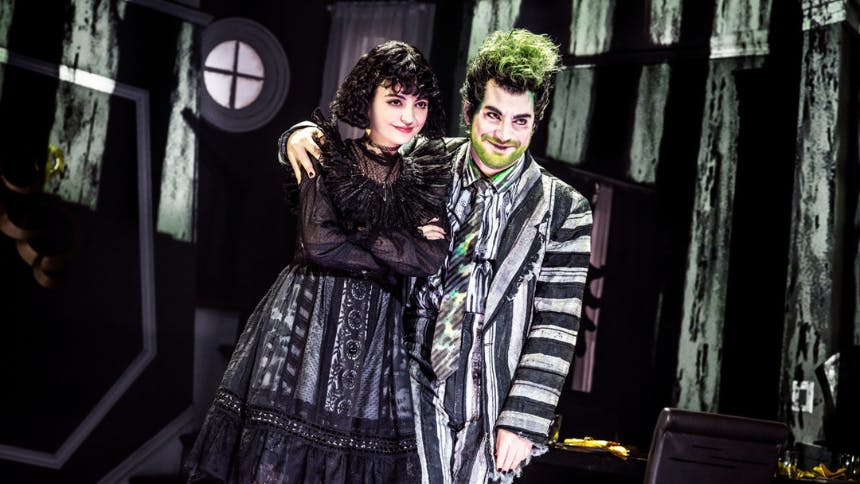
There’s nothing that compares to sitting in a Broadway theater, waiting for the performance to begin. The anticipation builds as an entire audience waits together for the curtain to rise. As the minutes tick by, you might find yourself looking around the space—the ornate ceiling, the rows of seats, the aisles, the stage—and wondering, “What else is in this building that I don’t know about?”
Well, you're in for a treat! Here are some fascinating things you probably didn’t know about Broadway theaters and their unique culture.
Missing the Row "I"
Most Broadway theaters skip the letter “I” in their seating charts to avoid confusing ticket holders who might mistake it for the number 1.
The Underground
The subterranean levels of the Majestic Theatre sit so low that, during especially quiet moments, you can occasionally hear the distant rumble of the subway passing beneath the building.
The Ghost Light
After the theater closes each night, a single lit bulb—known as the ghost light—is left glowing at center stage. Theater folklore says it's there to appease the resident ghosts. Yes, every theater is supposedly haunted… they’re mostly friendly.
The "Legacy Robe"
On the opening night of every Broadway musical with an ensemble, the historic Legacy Robe is presented to the chorus member with the most Broadway credits. The recipient wears the robe and spins clockwise three times around the stage to bring the production good luck.
The No-Clapping Rule
During technical rehearsals before a show opens, applause is often discouraged or even prohibited. Clapping during tech has long been considered bad luck and can also distract the cast and creative team as they fine-tune the production.
The Mayor’s Hidden Tunnel
Legend has it that a secret underground passage once connected the historic New Amsterdam Theatre to a nearby hotel, allowing city officials and influential theater figures, such as Florenz Ziegfeld, to enter and exit unnoticed while avoiding crowds and paparazzi.
The Lead’s Dressing Room Placement
In many older Broadway houses, including the Lyceum Theatre, the lead performer’s dressing room is located on the ground floor closest to the stage. This wasn’t simply a luxury—it made lightning-fast costume changes possible without sprinting up multiple flights of narrow stairs.
No Whistling Backstage!
Whistling backstage is considered one of theater’s oldest taboos. In the 1800s, many theaters employed sailors to operate their rope-and-pulley systems because of their rigging experience. Sailors communicated using coded whistles, so an actor casually whistling backstage could accidentally signal a stagehand to drop a backdrop or sandbag.
The "Pit Rail" Net
Many Broadway theaters stretch a black safety net between the stage and the orchestra pit. The net helps catch falling props, dropped microphones, and occasionally even performers, protecting the musicians below from unexpected accidents.
The "Asymmetrical" Grid
Because Broadway cuts diagonally across Manhattan’s street grid, many theater buildings are oddly shaped. Backstage areas in theaters such as the Winter Garden Theatre are noticeably angled rather than perfectly rectangular, often requiring scenic designers to use forced perspective so everything appears symmetrical from the audience.
Congratulations!
You’re officially a Broadway theater and culture expert.
Did you learn something new? Next time you see a Broadway show, take a moment to appreciate not just the performance, but the incredible history built into the theater itself. From hidden traditions to architectural quirks, there’s so much more to these historic buildings than meets the eye.